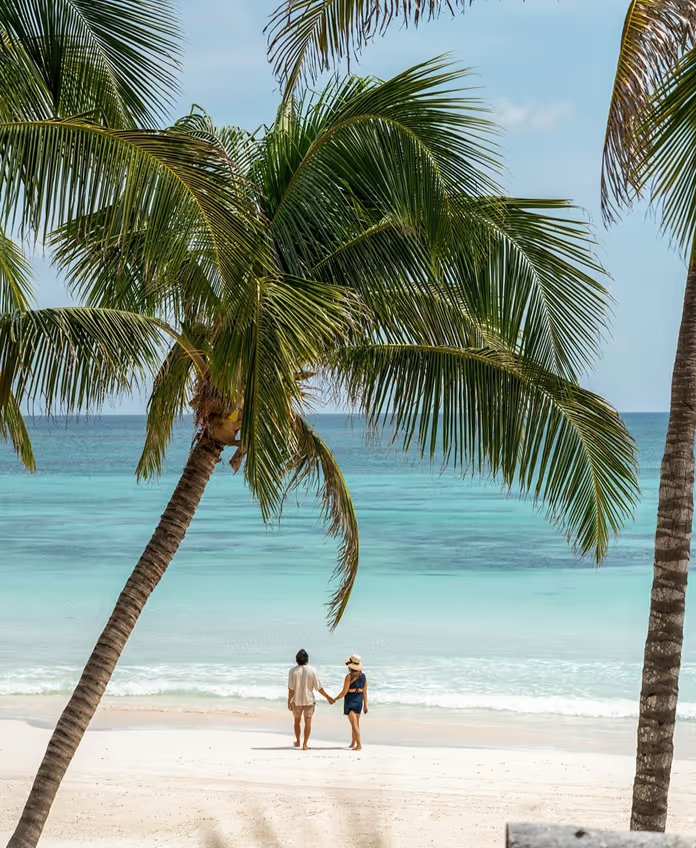
We get asked about seaweed more than almost anything else. Fair enough. You're flying a long way for that water.
So here's the plain version: what the season looks like, how to check it yourself, and what we actually do on our stretch of sand on the Tulum-Boca Paila road when it shows up.
When is sargassum season in Tulum?
The heaviest sargassum usually reaches Tulum between late spring and late summer, and November through April is usually the clearest stretch. That's the pattern recent reports for this coast describe. A Riviera Maya beach conditions report from August 2026 puts the peak at roughly June to August and calls November to April reliably clean. A Mexican report from October 2026 gives May to October as the months you're most likely to find it on the sand.
Some years start early. Some run late. The blooming and arrival of sargassum is unpredictable, and we can't tell you today what a Tuesday in July will look like. Nobody on this coast honestly can.
If the beach is the whole reason for the trip, we'd come between November and April.
How do you check sargassum before you travel?
Check the Quintana Roo sargassum monitoring network (Red de Monitoreo del Sargazo de Quintana Roo) a few days before you fly. It publishes a traffic-light map, the semáforo, showing how much seaweed is sitting offshore and on the beaches. Green is clear, red is heavy.
Two things we've learned about reading it:
- Look a few days out, not months. The map is a snapshot. A red week in spring tells you nothing about your week in August.
- Ask us about our beach. Conditions change from one stretch of sand to the next. Write to us at tulum@lavalise.com or call +52 55 3439 1161 and we'll tell you what we saw this morning.
What we do about seaweed on our beach
We have a team clearing the beach every day. They rake it, collect it and take it away from the strand, so on most days you walk out to sand, not a brown line.
On heavy days that isn't always enough. When a lot arrives at once, we'll point you to the big pool on our jungle side. Pool access is first come, first served, so morning is the easy time to find a lounger.
We're also part of a coast-wide effort on this. We sit in meetings with academics, the government and other businesses on the coast, working on longer fixes: collecting seaweed at sea, and offshore nets that hold it before it reaches the beach. It's slow work. We'd rather be in the room than not.
If the seaweed is in, here's how we'd spend the day
A seaweed day is a good excuse to use the parts of the hotel that have nothing to do with the sea.
The pool on the jungle side. Shade from the trees, and a short walk from the beach side. Go early.
Your own plunge pool. Three of our suites keep water right outside the door. The Jaguar Suite sits level with the cenote, with a plunge pool out on the deck. The Cenote Master Suite is one flight up, facing the cenote, with a plunge pool on the terrace under the canopy. The Rattan Suite is on the beach side but faces green, its plunge pool out in the planting. If you're booking for summer, these are the ones we'd look at first.
A cenote. Cenotes are fresh water, inland, and the sea doesn't touch them. They're one of the things we send people to anyway, seaweed or not. Ask us and we'll set one up.
The ruins. Tulum, Cobá and Chichén Itzá are all day trips from here. Chichén Itzá is the long one; Tulum is the short morning.
The spa or a yoga class. Treatments happen at the spa, around the property, or in your suite if you'd rather not move. Yoga runs from Ashtanga to Vinyasa Flow to Gannon Power Vinyasa.
Dinner at NÜ. Our jungle-side restaurant, recommended by the Michelin Guide, cooks modern and traditional Mexican. By evening nobody's thinking about the beach.
Which side to book if you're coming in summer
If your dates are fixed in the heavier months, book with the seaweed in mind. Beach side or jungle side, the choice is yours. The beach suites put you on the sand, and on a clear day there's nothing better. The jungle and cenote suites keep you close to the pool and the cenote, which is where the day goes when the shoreline isn't cooperating.
One practical note: read your rate's conditions before you book. Non-refundable rates can't be changed or cancelled at any time, so if you want room to move your dates, pick a rate that allows it.
And if you want a straight answer about the beach before you commit, write to us. We'd rather tell you the truth in an email than have you surprised on the sand.