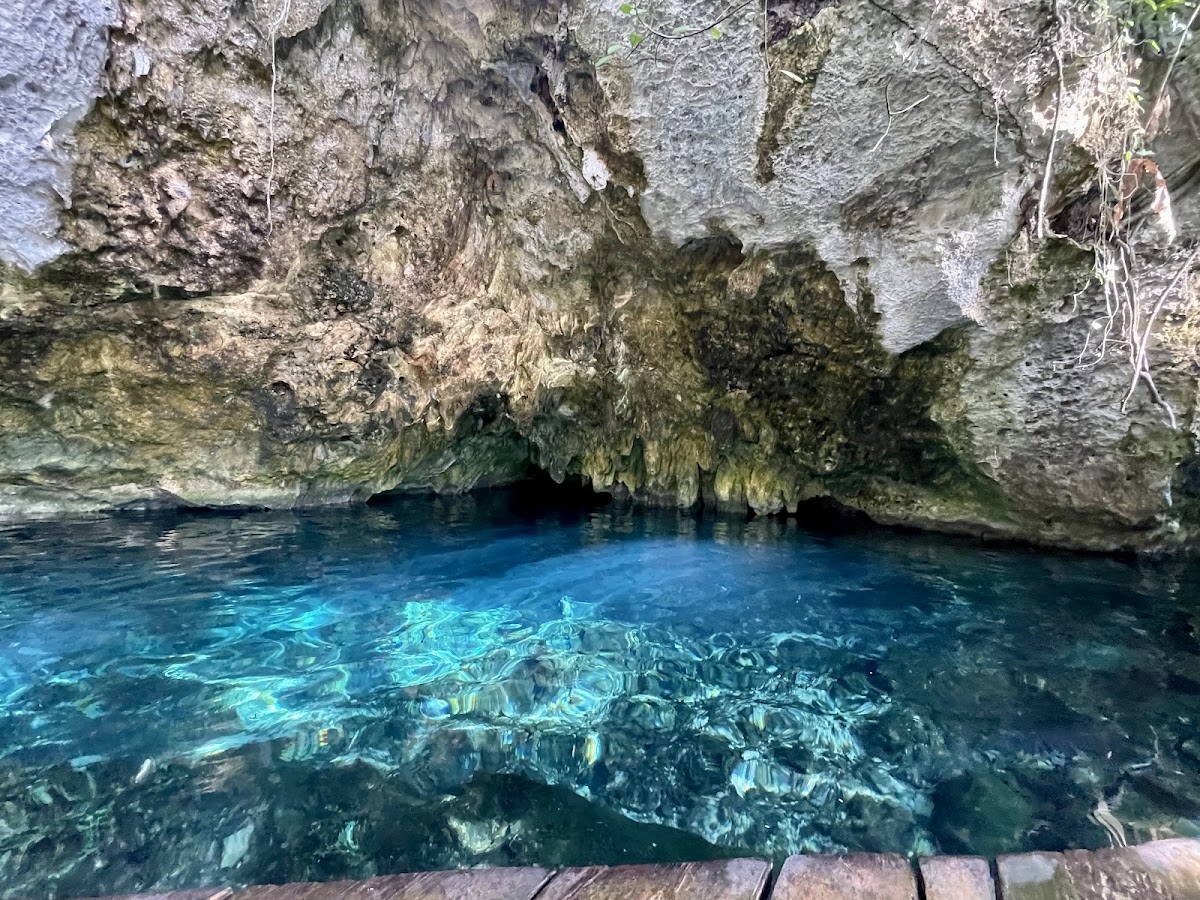
Can you dive the cenotes near Tulum?
Yes, and you don't need to be a cave diver to do it. Most cenote dives around Tulum are cavern dives. You stay within reach of daylight, follow a guide, and the standard Open Water certification covers the cavern routes at Dos Ojos. The deeper sites, The Pit being the one people ask us about, want an Advanced card.
We're on Carretera Tulum-Boca Paila, the beach road south of town. The cenotes are inland, in the jungle off the highway. So a dive day starts with a drive, and we'd plan the rest of the day around it rather than squeeze it in.
Cavern diving and cave diving are not the same thing
Cavern diving is what you'll do on a normal dive day. Cave diving is its own discipline, with its own training, and it isn't something you pick up on holiday.
The rules for cavern dives are strict, and that's a good sign. Alert Diver's write-up on Dos Ojos sets them out: your guide must be at least a certified divemaster who is also a trained cave diver, and the dive stays within set depth limits. If an operator can't tell you their guide's cave certification, keep looking.
You'll swim through rock, under formations, along a line. It's slower and quieter than a reef dive. Most people come up saying the light was the part they'll remember.
Dos Ojos: where we'd send a first-timer
Dos Ojos is the cenote most divers start with, and it's the one we'd point you to if this is your first cenote dive. The cavern dive tops out at about 9 meters (9.1 m, per Alert Diver), so it sits comfortably inside Open Water limits.
What divers come back describing: very clear water, shafts of light coming down from the openings, and stalactites and stalagmites you swim between. Operators commonly run it as two dives in one outing, with dive lights and 5 mm wetsuits supplied. Bring your certification card and your logbook.
If you've dived before but not in fresh water, this is the gentle way in. Shallow, guided, and you can see the exit.
The Pit: for when you have the Advanced card
The Pit is deeper, and divers who've done it are clear that an Advanced certification is required. Our view: if you don't hold Advanced yet, don't try to talk your way onto the boat, so to speak. Do Dos Ojos this trip and come back for The Pit.
If you do have the card, tell us when you write. It changes which day we'd suggest and how much else we'd put around it.
Not a diver? You still don't have to miss the cenotes
Swimming and snorkeling are how most people see the cenotes, and they're part of The Voyage Within, the programme our concierge books for you. It also covers temazcal, pottery, and the ruins at Cobá and Chichén Itzá. You decide how far you go.
We have a natural cenote on our own jungle side too, next to Tulum Beach's largest pool. Two of our suites, the Cenote Master Suite and the Jaguar Suite, sit right on it, each with a plunge pool on the terrace. That's a different thing from a dive in the jungle, but some guests like to wake up to one and spend a day in the other.
How we'd fit a dive day into your stay
We keep things quiet here. No schedules unless you want one. A dive day is the one day you might want one.
- Write ahead: email our concierge at tulum@lavalise.com with your certification level and the days you're with us. Cenote outings are booked through The Voyage Within.
- Leave the evening open: NÜ, our jungle-side restaurant, is dinner only and in the Michelin Guide's 2026 restaurant selection. After a day in fresh water, it's where we'd want to end up.
- Book the massage for the day after: La Valise Spa does massages at the spa, somewhere on the property, or on your own terrace. A deep-tissue the morning after two dives is not a bad idea.
- Ride, don't drive, on the off days: we keep shared bikes at the door for the beach road.
Our concierge is awake at any hour, so if your dive plans shift once you're here, just ask.